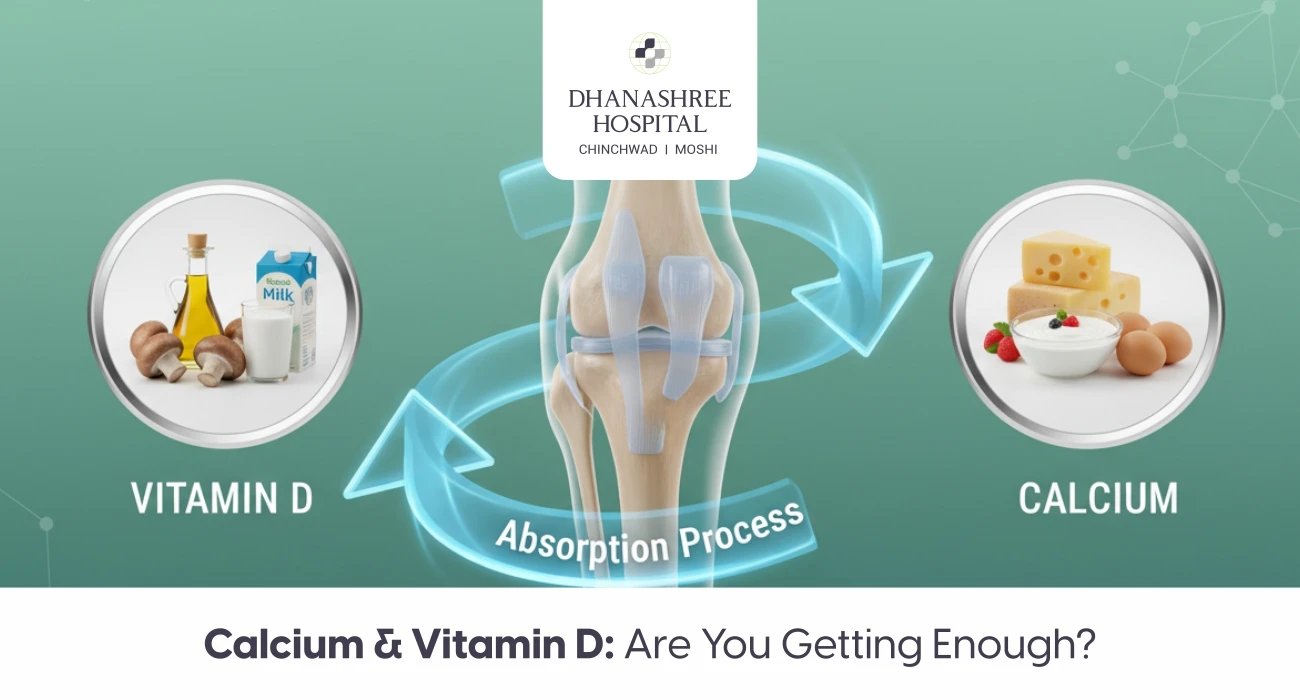
Calcium and Vitamin D are two of the most important nutrients for maintaining strong bones, healthy muscles, and proper nerve function. Despite their importance, many people do not consume adequate amounts through diet or sunlight exposure. Deficiency of these nutrients can gradually weaken bones, increase the risk of fractures, and contribute to long-term conditions such as osteoporosis and bone loss.
In many individuals, symptoms of calcium or Vitamin D deficiency appear slowly and may initially seem mild. Fatigue, muscle weakness, joint pain, and frequent bone discomfort are often overlooked. Early screening through routine health checkups and diagnostic testing can help identify deficiencies before they affect bone strength or overall health.
Calcium and Vitamin D have a closely connected role in maintaining bone health.
Calcium helps build and maintain strong bones and teeth.
Vitamin D helps the body absorb calcium efficiently from food.
Without sufficient Vitamin D, the body cannot properly utilise calcium, even if dietary intake appears adequate. Over time, this imbalance can weaken bones and increase fracture risk.
Why Many People Develop Deficiencies
Modern lifestyle habits contribute significantly to low calcium and Vitamin D levels.
Common causes include:
Limited exposure to sunlight
Low dietary intake of calcium-rich foods
Sedentary lifestyle
Age-related decrease in nutrient absorption
Hormonal changes in women
Certain medical conditions affecting bone metabolism
These deficiencies are especially common among women, older adults, and individuals with limited outdoor activity.
Early Signs You May Not Be Getting Enough
Calcium and Vitamin D deficiency often develops silently. Recognising early symptoms can help prevent long-term complications.
1. Persistent Fatigue
Low Vitamin D levels can affect energy metabolism, leading to constant tiredness and reduced stamina.
2. Bone and Joint Pain
Chronic aches in the lower back, knees, or hips may indicate reduced bone density or calcium deficiency.
3. Muscle Weakness
Muscle cramps, weakness, or difficulty climbing stairs may occur when Vitamin D levels are low.
4. Frequent Fractures
Fragile bones that fracture easily can indicate reduced bone mineral density.
5. Hair Loss and Nail Weakness
Calcium imbalance may sometimes affect hair health and nail strength.
Who Is at Higher Risk?
Certain individuals are more likely to develop calcium and Vitamin D deficiency.
High-risk groups include:
Women after menopause
Adults above 40 years
Individuals with limited sun exposure
People with thyroid disorders or hormonal imbalance
Individuals with digestive conditions affecting nutrient absorption
People following restrictive diets
How Deficiency Affects Bone Health
Calcium and Vitamin D deficiencies can lead to several long-term health complications if untreated.
Possible effects include:
Osteoporosis and bone thinning
Increased fracture risk
Chronic back pain
Reduced mobility and muscle weakness
Joint discomfort and stiffness
How Calcium and Vitamin D Levels Are Tested
Doctors may recommend certain tests to evaluate bone health and nutrient levels.
Common diagnostic evaluations include:
Blood tests for Vitamin D levels
Serum calcium tests
Bone density tests when osteoporosis is suspected
Routine health screening
Natural Sources of Calcium
Including calcium-rich foods in daily meals helps maintain bone health.
Important dietary sources include:
Milk and dairy products
Yogurt and cheese
Green leafy vegetables
Almonds and sesame seeds
Fortified cereals
Tofu and soy products
Natural Sources of Vitamin D
Vitamin D can be obtained through sunlight exposure and certain foods.
Sources include:
Sunlight exposure for 15–20 minutes daily
Fatty fish such as salmon and sardines
Egg yolks
Fortified milk and cereals
Mushrooms
When Supplements May Be Necessary
In some individuals, diet and sunlight alone may not be sufficient to correct deficiencies.
Doctors may recommend supplements when:
Blood tests confirm deficiency
Bone density decreases significantly
Symptoms of weakness or fatigue persist
Patients are at high risk for osteoporosis
Importance of Preventive Health Screening
Routine health checkups play an important role in identifying nutrient deficiencies before they affect bone health.
Preventive screening helps in:
Detecting early signs of osteoporosis
Monitoring calcium and Vitamin D levels
Evaluating bone strength
Preventing fractures and long-term complications
Preventive healthcare through regular medical consultations and screening improves long-term musculoskeletal health.
Frequently Asked Questions
Vitamin D helps the body absorb calcium efficiently, which is essential for strong bones and teeth.
Fatigue, muscle weakness, bone pain, and frequent infections can indicate low Vitamin D levels.
Yes. Poor diet, sedentary lifestyle, and limited sunlight exposure can affect people of any age.
Around 15–20 minutes of daily sunlight exposure is generally recommended.
Yes. Long-term calcium and Vitamin D deficiency can weaken bones and increase fracture risk.
It is best to consult a doctor and undergo testing before starting supplements.
A balanced diet can help, but some individuals may still require supplements depending on their health condition.
People at risk for deficiency should consider regular screening during routine health checkups.
Calcium and Vitamin D deficiencies often develop silently but can significantly affect bone strength, mobility, and overall health over time. Early screening, proper nutrition, and timely medical guidance are essential for maintaining healthy bones and preventing long-term complications.
If you are experiencing persistent fatigue, joint discomfort, or symptoms related to bone weakness, professional evaluation can help identify nutritional deficiencies and provide the right treatment. Schedule a consultation today or contact us to speak with our healthcare team and prioritise your long-term bone health.