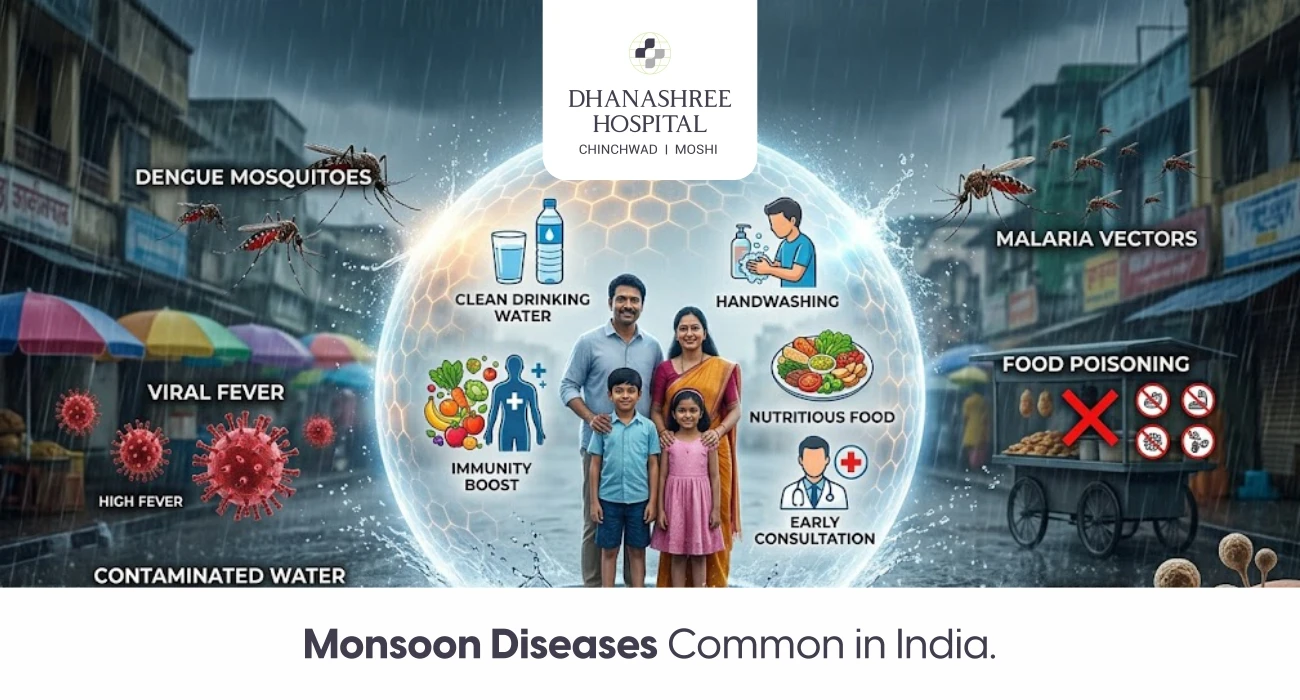
The monsoon season brings relief from heat, but it also creates an environment where infections and illnesses spread more easily. Increased humidity, water stagnation, and contamination significantly raise the risk of several seasonal diseases.
Understanding common monsoon-related illnesses and taking preventive measures can help protect your health and reduce complications.
Dengue is one of the most common monsoon diseases, spread by mosquitoes that breed in stagnant water. Water collected in containers, gutters, and open areas becomes a breeding ground.
Symptoms may include high fever, body pain, and weakness. Early diagnosis through timely testing at a Diagnostics Center is important for proper management.
Malaria Spreads Through Stagnant Water
Like dengue, malaria is also transmitted through mosquito bites. The risk increases during monsoon due to water accumulation.
Preventive measures such as avoiding stagnant water and using protection against mosquito bites are essential.
Viral Fever Becomes More Common
Seasonal viral infections rise due to sudden weather changes and humidity. Symptoms often include fever, fatigue, body aches, and weakness.
If fever persists, early evaluation with basic blood tests helps identify the cause and avoid complications.
Water Contamination Increases Infection Risk
Monsoon often leads to contamination of drinking water, increasing the risk of infections such as typhoid and gastrointestinal illnesses.
Ensuring access to safe drinking water and proper sanitation is critical during this time.
Food Poisoning Cases Rise
Consumption of contaminated or improperly stored food can lead to food poisoning. Street food and uncovered food items are especially risky during monsoon.
Symptoms like vomiting, diarrhea, and stomach pain should not be ignored and may require medical attention.
Humidity Encourages Fungal Infections
High humidity creates a favorable environment for fungal growth, especially affecting the skin.
Common issues include itching, rashes, and infections in areas exposed to moisture. Maintaining hygiene and keeping the skin dry helps prevent such infections.
Low Immunity Increases Illness Risk
Many individuals experience reduced immunity during seasonal changes, making them more vulnerable to infections.
Routine health checkups and preventive screenings available at our Diagnostics Center can help monitor overall health and detect early concerns.
Proper Hygiene Becomes Essential
Maintaining personal and environmental hygiene plays a key role in preventing infections.
Simple habits like regular handwashing, clean surroundings, and safe food handling can significantly reduce disease risk.
Safe Drinking Water Is Important
Drinking contaminated water is one of the leading causes of monsoon-related illnesses. Boiled or filtered water should be preferred to avoid infections.
Early Medical Guidance Prevents Complications
Many monsoon diseases can be managed effectively if detected early. Delaying treatment may lead to complications, especially in children, elderly individuals, or those with existing health conditions.
Timely consultation and access to reliable healthcare services help ensure better recovery outcomes.
Protecting Your Health This Monsoon
Monsoon-related diseases are common, but they are largely preventable with awareness and timely action. Maintaining hygiene, staying cautious about food and water, and monitoring symptoms can make a significant difference.
If you experience persistent fever, weakness, or signs of infection, early medical evaluation is important. Contact us for timely diagnosis, expert care, and support to stay healthy throughout the season.
Frequently Asked Questions
Dengue, malaria, viral fever, food poisoning, and fungal infections are most common.
Humidity, stagnant water, and contamination create favorable conditions for infections.
Avoid stagnant water, use repellents, and maintain clean surroundings.
Yes, contaminated water can lead to serious infections.
Fever, body aches, fatigue, and weakness.
If symptoms persist for more than a few days or worsen.
Yes, by maintaining hygiene and keeping the body dry.
Yes, especially if symptoms appear or immunity is low.